
The Complete Guide to Wagyu Beef
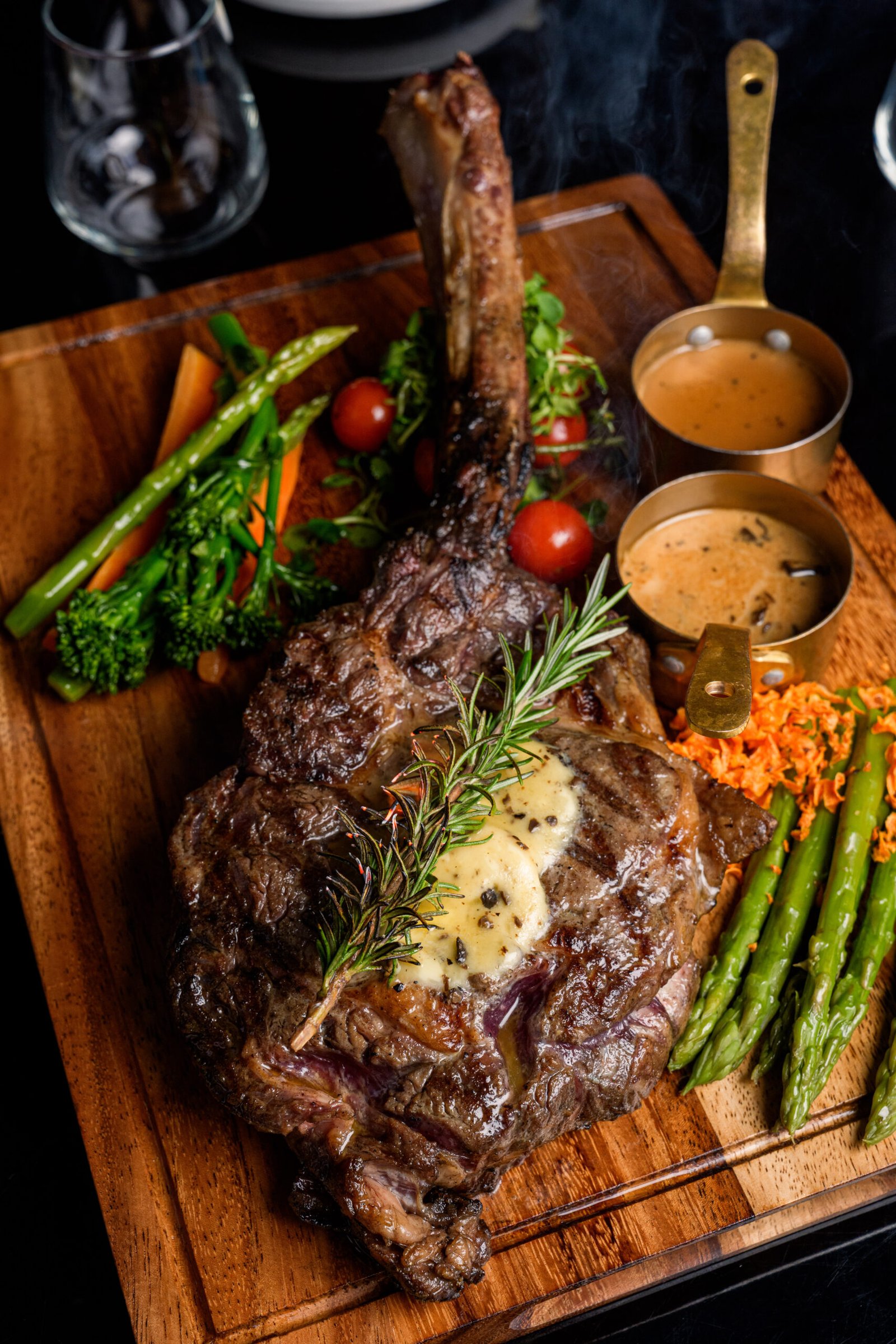
Wagyu, Japanese for 'Japanese cow', refers to four breeds of cattle: Japanese Black, Japanese Brown, Japanese Polled and Japanese Shorthorn. Of these, Japanese Black accounts for over 90% of all wagyu produced and is the breed behind the beef that has redefined what premium meat can be. The genetics of these cattle predispose them to deposit fat intramuscularly, within the muscle fibres themselves, rather than around the outside, creating the fine white marbling threads that set wagyu apart from every other breed on the planet.
Marbling, Grade & Provenance
This marbling is measured against the Beef Marbling Standard, a Japanese grading scale running from BMS 1 (minimal fat) to BMS 12 (the theoretical maximum). Alongside this, Japanese wagyu is assigned a quality grade from A to C, reflecting yield, and a number from 1 to 5 reflecting meat quality across four criteria: marbling, colour, firmness and fat quality. A5, the highest possible rating, represents beef where all four criteria score at the elite level.
At AVA, we source full-blood wagyu graded A4 and A5. A4 wagyu already exceeds what most restaurants serve; A5 is the pinnacle, a BMS of 8 to 12, so thoroughly marbled that the fat appears as an intricate white lattice through the deep red muscle. This is the grade that melts on the tongue at body temperature, releasing flavour compounds that no other beef can replicate.
True wagyu carries full provenance documentation: full traceability, from farm records through to certification, so every cut can be traced back to its source. Much of what is marketed as wagyu outside Japan is crossbred or domestic beef that shares little with the original. When we tell you our wagyu is full-blood, we mean it, and the certification backs every claim.
Whether you choose the signature wagyu ribeye or the tomahawk sharing cut, you are tasting centuries of Japanese livestock heritage. At AVA, every wagyu cut is rested after cooking, seared on a 400°C iron to form a crust that seals in the juices, and finished with nothing more than fleur de sel.
The beef speaks for itself.
The Experience on Your Plate
Because of the high intramuscular fat content, wagyu behaves differently to conventional beef on the iron. It should be served at a lower internal temperature than standard steak: medium-rare, around 54 to 57°C at the centre, is ideal for A4 and A5 cuts. Cooking beyond this risks rendering the intramuscular fat too quickly, losing the characteristic melt and softness that define the grade.
The flavour profile is equally distinct. Where a dry-aged sirloin delivers depth and mineral earthiness, wagyu offers a sweeter, more buttery richness, a clean umami that lingers on the palate long after the final bite. This richness is why portions of genuine A5 wagyu are often served smaller than conventional steaks: 150 to 200g is more than satisfying, and the flavour intensity at this grade means a smaller portion leaves a greater impression than a large one of lesser quality.
At AVA, we serve wagyu with considered accompaniments: sauces light enough not to overwhelm, and sides chosen to provide contrast rather than compete. Crisp greens, clean potato preparations, nothing that dulls the central flavour. Our team can guide you through the pairing options when you arrive.
Experience it at the table
Wagyu at AVA is offered in limited covers each service, A4 and A5 grades, sourced full-blood and certified. Reserve your table and let our team guide you through the evening's selection.
Reserve a Table